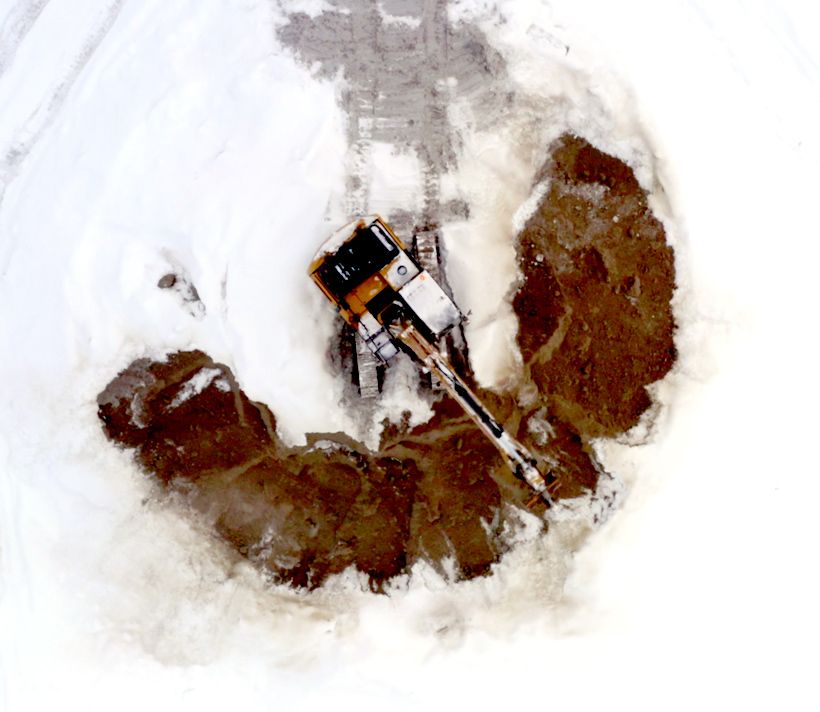






Things are different when it’s very, very cold.
At -32° Celsius (-25.6° Fahrenheit) standard summer and winter blend diesel fuel turns into something that looks a lot like Sherbet and incorrectly spec'd oil flows like cold honey. Neither of them is going to do its job at those temperatures, but many Perkins customers have to use their equipment in temperatures that low or even lower.
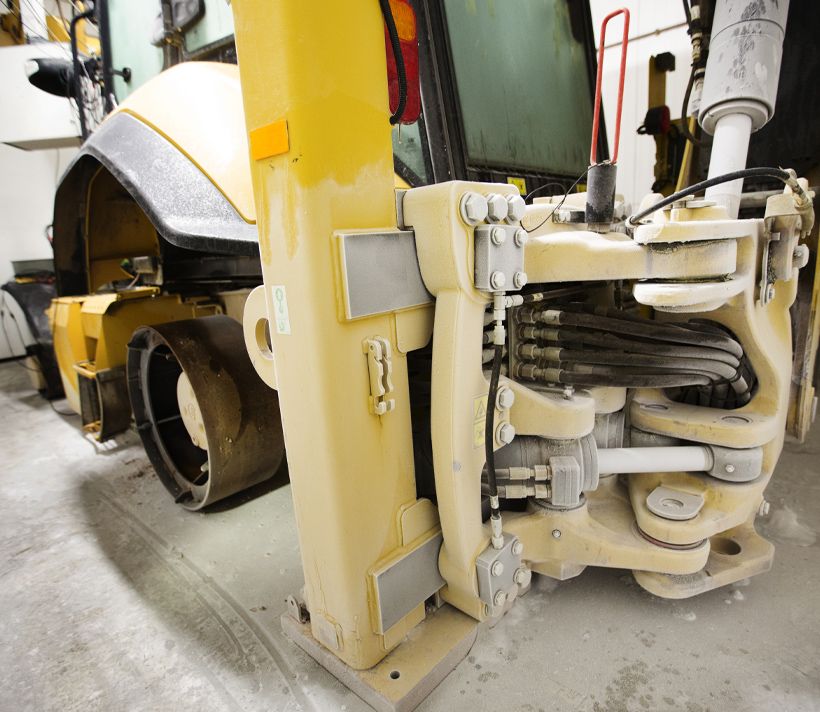
Making sure customers can still use their equipment in these harsh conditions is vital for Perkins, which test its engines in sophisticated cold chambers, some of which are also big enough to accommodate large Perkins powered machines.
“Most of our testing is done at temperatures down to -32° C,” engineering manager Ryan Connor explained, “but the chambers are able to go lower than that when necessary. We will typically measure performance at 0°, -10° and -18° C (32°, 14° and -0.4° F) during a test cycle and then go down to -32° or lower as necessary for the application we’re testing.
‘Waxed up’ fuel and viscous oil.
“At anything much below 0° C ordinary summer blend diesel fuel could begin to ‘wax up’ and get thicker and thicker as the temperature drops. Their chemistry simply isn’t compatible with really low temperatures, and once they start to ‘wax up’ they won’t flow properly through filters and injectors.
“Although they don’t ‘wax up’, engine oil exhibits similar behaviour. They get more and more viscous as the temperature drops. Imagine trying to lubricate a tight-fitting engine bearing with something with the consistency of cold honey.
“Ultimately, the engine won’t start and the customer can’t use the machine it powers. Our job is to assess the low temperature behaviour of different grades of fuels and oils as part of our ‘cold start’ development plan. The goal is to provide tested and validated fuel and lubricant recommendations to the customer.”
Special solutions for unusual conditions.
Perkins incorporates the data from the testing team and other sources in the fuels guide available by engine model at Operation and Maintenance Manuals | Perkins. Following the guidance found there not only helps ensure reliable starting, it also impacts overall performance of the engine and aftertreatment.
Stage V engines are equipped with high precision injectors to use fuel efficiently. When it’s cold, the wrong grade of fuel won’t even get through the filter, let alone the injector. That, in turn, can lead to a whole series of problems as the temperature drops, impacting engine performance and potentially adding unnecessarily to overall emissions.
“It’s really important to follow the fuel and fluids guide Perkins supplies,” Ryan added. “You should always make sure to select the right fluids for the application and the environment they’re in. Our development programmes include broad and rigorous testing, however, for optimal performance we need to pick the right fluids.”
There’s no substitute for reality.
The Perkins team use cold chambers to test and evaluate engines and equipment under carefully controlled laboratory conditions. But, even in the largest cold chamber they can’t duplicate the actual conditions and work cycles a piece of equipment experiences in the real world.
That’s where the Perkins’ research and development teams come into the picture. They spend several weeks each winter at the Colmis proving ground in Arpeglog, Sweden which is 62 miles (100 km) south of the Arctic Circle.
“Our teams need to test engines and the machines they power in an extreme environment,” Ryan explained. “They run long hours on machines in the cold doing the kind of tasks they are built to accomplish - digging, loading, lifting and so forth, activities which you can’t do in a cold chamber."
Deep cold changes things.
One of the testing goals is to see how different parts perform in freezing temperatures, as the combination of cold and the engine vibrations can make some materials become brittle. “We’re making sure genuine Perkins parts aren’t going to fail if the machine is used in these temperatures for a long time.”
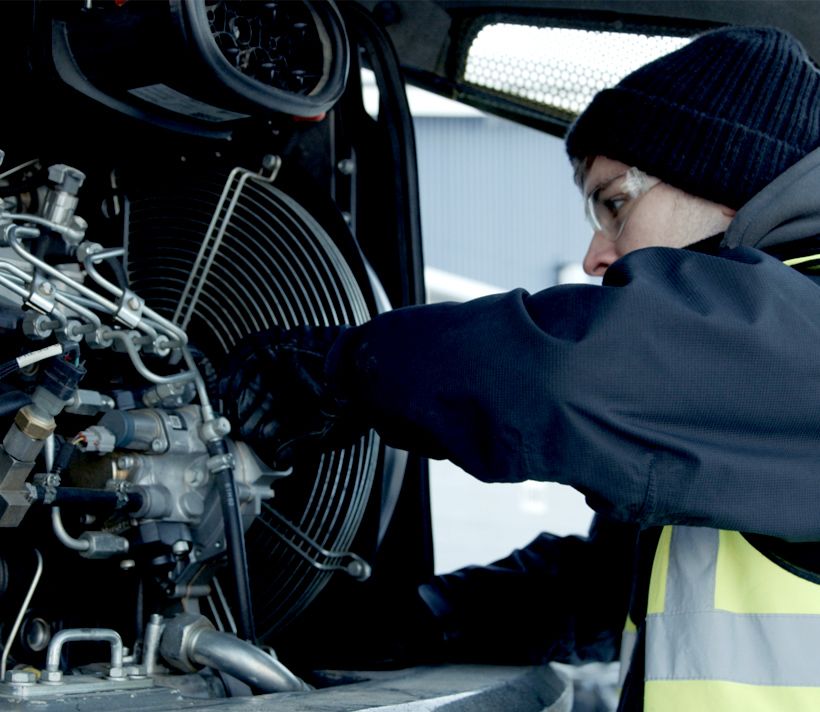
Part of the testing process involves using a borescope to inspect each machine daily to detect abnormal wear or other potential problems. That includes not only engine components, but also the aftertreatment system to ensure that internal components are not being damaged by the harsh conditions.
Air, oil and fuel filters also are tested and their performance is analysed regularly. When they are taken out of service for scheduled maintenance both the samples collected and the filters themselves are sent for laboratory testing and validation.
Genuine parts, reliable performance.
“Everything we do is aimed at minimising any problem that might impact a customer using a Perkins powered machine under these conditions,” Ryan added. “Our goal is to find and fix any problem this environment may cause so our customers get efficient, reliable machines.
“That’s why it is so important that customers use the correct fuels as outlined in the guide and genuine Perkins parts, which have been tested to perform in the cold. And, believe me, things really are different when it’s freezing cold.”
Ryan recently caught up with industry journalist Peter Haddock for his Discovering the Power of Perkins video series. Check out the video below.
-
Popular 904 Series gets a power boost
Perkins has announced a power uplift to the popular 3.6 litre variant.
Read more -
What's inside matters
We chat to Corey Berry following the successful showings at American Rental Association (ARA) and United Rentals exhibitions.
Read more -
Putting an electric wheel loader through its paces
We headed to Malaga, Spain, to learn more and see the machine in action.
Read more -
The year ahead for agri-tech
What might the coming months hold? Powernews does some opinion legwork, so you don’t have to.
Read more -
Marine focus: A proven method
The Perkins marine distributor network is there to service customers of Perkins anywhere in the world.
Read more -
Perkins brings next-generation performance to power generation
Available in the second half of 2025, the 2600 Series offers excellent load acceptance, fuel efficiency and versatility.
Read more -
Putting hybrids to the test
How our Customer Solutions and Engineering teams are actively helping customers reduce fuel consumption.
Read more -
California: why it's so important to America's agricultural output
The state’s farmers grow more than 400 commodity crops, 19 of them unique to the Golden State.
Read more -
China focus: Engine launches and Bauma China
More than 280,000 visitors from across the world attended this year’s four-day long Bauma China exhibition in Shanghai.
Read more -
From build-line to boat – the journey of one Perkins® E44
We follow the journey from a Perkins facility in the UK to installation on a passenger ferry in Singapore.
Read more